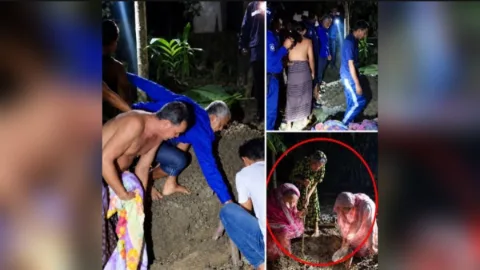
A widespread debate has been sparked over the situation surrounding the burial and guard of honor for Manik Poshari, a witness in the International Crimes Tribunal in Pirojpur, and a photograph that has gone viral on social media. As the country discusses a photo of three women digging a grave, local investigations have uncovered different information.
Different information about grave digging:
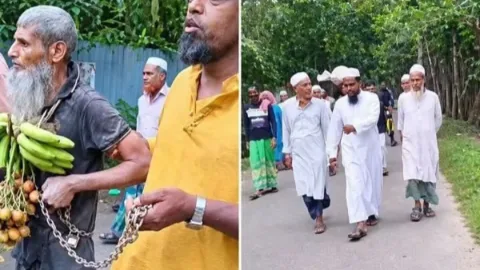
Read more: Elderly man paraded in village in Pirojpur for taking bananas and betel nuts
Social media claims that due to local political obstacles, men did not come forward, and the deceased person's female relatives dug the grave alone. However, Shankarpasha Union's local village police, Motiur Rahman, told the media, "We took the initiative to dig the grave at around 11:30 pm on the instructions of the UNO. When we went to his sister's house to bring equipment, she and two other women came and helped remove the soil. Basically, I and another local man dug the grave, and the women only assisted."
Local residents said, quoting the deceased's sister Hena Poshari, that the grave was first dug and then filled in by someone, and later, with the help of the administration, it was dug again in the second phase, and there were men and administrative personnel present. Therefore, locals claim that the narrative of "only women digging the grave alone" is partial and misleading.
Local Jamaat and protesters' statements:
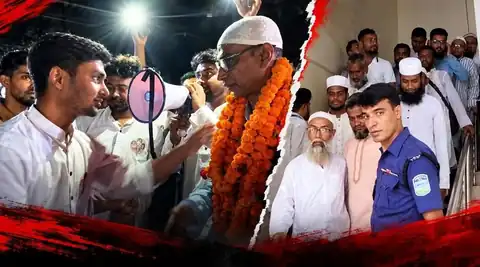
Abdur Razzak, assistant secretary of Pirojpur district Jamaat-e-Islami, denied allegations of obstruction to the janaza and burial, saying, "Jamaat did not obstruct the burial of the dead body. However, there has been a long-standing debate among locals about the deceased Manik Poshari's freedom fighter certificate. The anger of local people and Saidi followers was mainly against his controversial certificate and the state honor given to him. The administration later completed the guard of honor at the police lines."
Role of activists and public reaction:
Read more: Fact Check: Are Police Really Buying '1000 Riot Cars' To War Against People?
National Citizen Committee (NCC) and some human rights activists living abroad have sparked intense discussions on social media about their role in this incident. A large section of ordinary netizens and local analysts are questioning why a specific political party was hastily blamed without verifying the actual truth at the field level and the statement of the village police.
Many are reminding people of past incidents during the previous government's tenure, saying that when Jamaat leaders' janaza and burial were state-blocked, many of today's critics were silent. This selective stance is raising questions about the neutrality and acceptability of these new political platforms in public minds, according to political analysts.