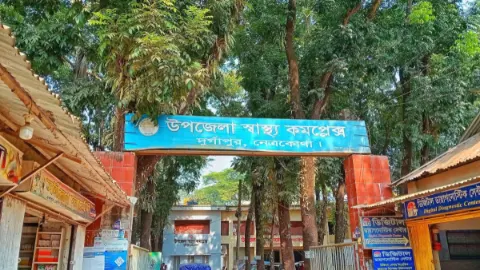
Serious allegations have arisen that in Durgapur upazila of Netrokona, the government welfare programme ‘Family Card’ data‑collection drive is being kept covertly active through nepotism, political influence and by sheltering fugitive Awami League functionaries of an organization declared prohibited. Local sources say that the actions of some influential local leaders have sparked extreme discontent among genuinely destitute and helpless people in various unions of the upazila.
Allegations regarding the appointment of data collectors and nepotism:
On the ground, visits to various areas of the upazila, including Chandigarh Union, reveal that although the administration has issued instructions to compile a list of genuinely destitute persons in a proper and neutral manner, questions have been raised about transparency in the field appointment of data collectors. Locally, a young man named Sadi has been engaged as a data collector for the programme, and locals say his activities are not limited to Ward 4 of Chandigarh Union but extend to several other nearby locations.
According to several local sources and victims who wish to remain anonymous for security reasons, the appointment process is backed by Durgapur upazila BNP (Bangladesh Nationalist Party) organisational secretary Alhaj Jamal Uddin Master. Locals claim that Sadi received the assignment on Jamal Uddin Master’s direct recommendation. Ground reports indicate that Sadi’s paternal uncle, AKM Namul Haq, a BNP leader and close friend and political associate of Jamal Uddin Master, facilitated his nephew’s involvement in the government programme. Victims, citing multiple sources, allege that Namul Haq, who is active in various political activities and operates in the shadows on behalf of Jamal Uddin Master, used his family connections to place his nephew Sadi in the scheme.
Sheltering fugitive leaders of a prohibited organization and covert activities at various locations:
Further sensitive allegations have emerged from field investigations concerning the appointment. Several local eyewitnesses and victims, who conceal their identities for fear of reprisals, accuse Alhaj Jamal Uddin Master of directly enabling fugitive functionaries of the Awami League and its student wing, both declared prohibited, to take shelter within his own circle and to conduct covert organisational activities.
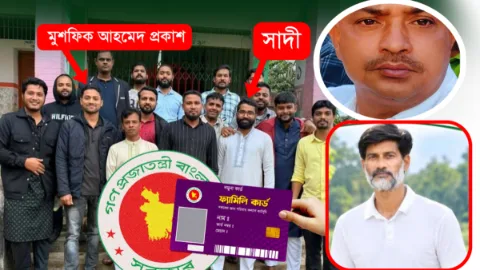
According to the allegations, Mushfiqul Ahmed Prokash, vice‑president of the Mymensingh District Chhatra League and a 2016 graduate of Royal Media College — known as a follower of the political circle of AKM Afzalur Rahman Babur, the current central general secretary of the Volunteer League — has fled from Mymensingh and is now residing in Durgapur.
Investigations on the ground and information provided by eyewitnesses suggest that with the direct assistance of Sadi, this fugitive Chhatra League leader has found safe shelter in Durgapur. The victims claim that their situation and activities are not limited to just one specific place like Ward No. 4 of Chandigaon; rather, due to the political patronage and shelter of Jamal Uddin Master, Mushfiq Ahmed Prakash is operating from hiding and openly roaming around and taking pictures with Sadi and his friends in different areas of Durgapur—which has also been found in the information collected by our reporters.
The entire Durgapur is witnessing the same scenario and the same complaint from local residents:
Local conscious citizens and the victims allege that the incident in Chandigaon Union is not an isolated incident in a specific area; rather, due to the personal interests and political rivalry of some local leaders, such irregularities are occurring in various government activities, including family cards, throughout Durgapur upazila.
According to the victims, common people say that in the current context of the country, the Awami League and its affiliates, which have been banned, are trying to create anxiety and unrest in people's minds in various ways. In such a situation, with the patronage of local influential leaders, the leaders and activists of the banned organization are staying out of the reach of the law, and since they face various threats if they speak out, extreme resentment and a sense of insecurity have been created among the common people.
Expressing extreme frustration at this grassroots situation, a helpless elderly resident of the area said in a tone of lamentation, "If a party has leaders like this, one of them can destroy all the party's achievements and everything. The leaders and activists of the banned Awami League are creating so much unrest in the country today; but if the BNP leaders at the grassroots level provide them with shelter and secretly keep everything okay, then what can we common people expect from the party's top leadership and Prime Minister Tarique Rahman?"
Demand for legal context and administrative intervention:
The question of the affected local residents is—when lists are made through party influence and accused individuals, how will the truly destitute and helpless families in Durgapur upazila fairly receive the benefits of family cards?
Under the prevailing laws of Bangladesh, providing shelter to fugitive leaders and activists of an organisation banned by the state and assisting in secretly conducting organisational activities are considered punishable offences. In this situation, the victims of Durgapur have demanded urgent intervention from the upazila administration, party high command and law enforcement agencies to properly investigate the allegations, collect family card information across the entire upazila in a transparent manner, exempt controversial individuals from the list, ensure the security of informants and locals, and take legal action against the accused.
(Special note: In line with the principles of international and domestic journalism, efforts are ongoing to contact the accused, Alhaj Jamal Uddin Master, and the relevant administration to learn about their comments on the allegations. If any comments are obtained from them in support of their position, they will be published with importance in the next report.)