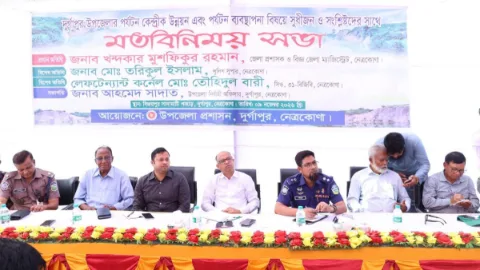
An important discussion meeting was held with intellectuals and concerned individuals to utilize the potential of tourism in Durgapur upazila of Netrokona and develop a comprehensive tourism management system. High-ranking officials of the district administration and district police attended the meeting and highlighted the government's realistic plan to establish Durgapur and Kalomakanda as a full-fledged 'tourism hub'. To build an international standard tourism city, emphasis was placed on sustainable security measures, infrastructure development, increased modern civic amenities, and the collective partnership of local people.
Tourism hub transformation possibilities and current context:
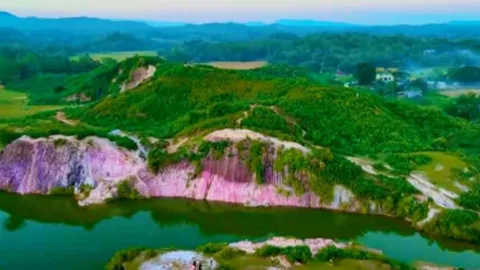
The Durgapur and Kalomakanda areas of Netrokona are visited by a large number of tourists every year due to their natural beauty, including white clay, hills, and rivers. To transform this vast potential into a planned tourism economy, modern management and foolproof security systems are essential. A meeting held in the Bijoypur Sadamatia Pahar area of Durgapur on 09 November, organized by the upazila administration, outlined a plan to upgrade the tourism sector in this region to international standards. According to local intellectuals and field-level officials of the administration, building a reliable tourism city requires a permanent solution to its basic civic amenities.
Sustainable security measures and crime prevention strategies:
A key condition for an ideal tourism city is to ensure the uninterrupted and 24-hour security of tourists. Netrokona Police Superintendent Mr. Mohammad Torikul Islam assured full cooperation on behalf of the district police during the meeting. According to field-level sources of the law enforcement agencies and security experts, it is essential to increase police surveillance at tourist points, install CCTV cameras, ensure adequate lighting at night, and intensify regular patrols in crime-prone areas. In particular, a zero-tolerance policy has been adopted to ensure the safety of women and foreign tourists and to prevent any form of extortion, theft, or harassment.
Infrastructure development and proposals from dignitaries
Local dignitaries, social thinkers and environmentalists present at the views exchange meeting said that an area does not become a tourist city just because it is naturally beautiful. They said ensuring improved communication systems, standard accommodation facilities, modern sewage systems and supply of safe drinking water is essential for this. Hotel and restaurant businessmen and representatives of the civil society said that the administration should regularly monitor the accommodation facilities for tourists so that they are affordable and healthy. Besides, the meeting attached great importance to creating permanent employment opportunities for local small ethnic community people by showcasing their rich cultural heritage to tourists.
International standard hospitality and the role of locals
can be simplified to maintain short format lines.
The chief guest of the meeting, Netrakona District Commissioner and Magistrate Khandaker Mushfiqur Rahman, cited various successful examples of global tourism in his speech and said that sustainable development of the tourism sector is not possible without international standard hospitality. He called upon people of all classes and professions to work together in unity. According to dignitaries, the local autorickshaw drivers, boatmen and small businessmen must be ensured to behave sincerely with tourists. They emphasized the need for regular training and awareness campaigns for locals so that tourists are not cheated in any way by being overcharged or sold products.
Source:
• Press release and minutes of the Netrakona DC office official social media page (9 November, 2026).
• Special policy speech of the Netrakona District Commissioner and Magistrate.
• The District Police Super's special instructions on security and field-level reports on law and order.
• Opinions and proposals of local civil society members, journalists and representatives of small ethnic communities present at the views exchange meeting.