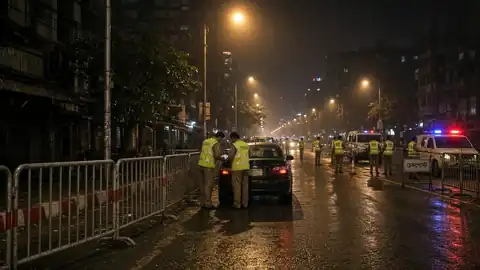
Dhaka: The incidents of arson and crude bomb explosions in moving and stationary public transports at different parts of the country have created extreme panic among the general public. However, there is a significant discrepancy between the information provided by the government's high and field-level law enforcement agencies regarding the actual scenario of this violence and damage. On the one hand, the number of sabotage incidents is increasing day by day according to the records of the Police Headquarters, while on the other hand, the number of explosions has been shown to be limited in the statement made by the Home Minister in the National Parliament.
According to the field-level information obtained from the Police Headquarters and the Dhaka Metropolitan Police (DMP), at least 31 specific incidents of crude bomb explosions and arson in vehicles have been documented across the country from 1 October to 8 November 2026. In these incidents, 51 people have been arrested on charges of involvement, and later, the DMP arrested 19 more people. Even in the last two days, there have been reports of multiple crude bomb explosions and recovery of fresh bombs in the Dhaka University area, Dhanmondi 32, Kalabagan, and outside Dhaka in Manikganj and Chattogram.
Read more: Former education minister arrested from secret hideout in Uttara
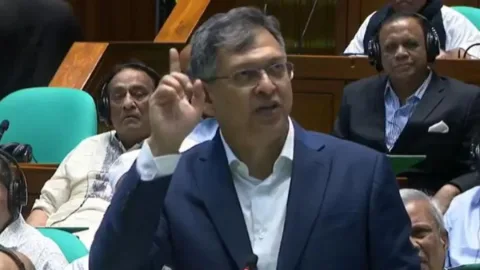
However, on 10 November, in response to the criticism of the opposition party in the National Parliament, Home Minister Salahuddin Ahmed claimed that only 7 crude bomb explosions had taken place across the country in recent times, and 4 people had been arrested. He described the incidents of setting fire to a bus in front of the Business Faculty of Dhaka University or at midnight as isolated and symbolic, saying that the overall law and order situation in the country had not deteriorated and the situation was 100% under control.
According to security analysts, where the field-level police records show evidence of more than 31 incidents, the Home Minister's statement in Parliament mentioning only 7 explosions is clearly a political strategy. This kind of information contraction or attempt to avoid responsibility is often made to show the country's security situation as completely normal to the international media and foreign investors. But the reality is that when a Home Ministry hides or downplays the actual account of the field level, the criminals get the courage to carry out even bigger acts of sabotage.
In this game of politics between the government and the opposition parties, the common people are becoming the main victims of the cocktail or fire. Those who are losing their livelihoods due to the burning of buses in Dhanmondi, Baridhara, or Faridpur are all low-income or middle-class transport workers. A cocktail explosion not only makes noise, but the glass and splinters inside can also cripple ordinary pedestrians for life. There is no scope to downplay this culture of putting people's lives at risk by setting fire to buses at night as isolated incidents.
In a democratic state, the primary and main responsibility of the government is to ensure the safety of the people's lives and property. Although temporary political benefits can be gained by hiding information or suppressing specific statistics, it reduces the credibility of state institutions in the long run. The expectation of the common people is that the government will reveal the true account of each incident of sabotage without making excuses for isolated incidents or instigation from the other side and will bring the perpetrators under strict legal action without considering their political identity.
The main sources of information and research used in the report are:
Read more: Pirojpur burial of Manik Pashari: Searching for social media images and reality
1. Bangladesh Police Headquarters (Crime and Sabotage Statistics Cell, October-November 2026).
2. Dhaka Metropolitan Police (DMP) Media and Public Relations Department (Press release regarding arrests and recovery of explosives, November 2026).
3. Bangladesh National Parliament Secretariat (Record of the parliamentary session and question-answer phase on 10 November 2026).
4. Ministry of Home Affairs, Government of the People's Republic of Bangladesh (Official statement by the Minister regarding law and order situation and border security).
Legal Disclaimer:
This report is made entirely in the public interest and in accordance with the constitutional right to freedom of the press (Article 39) and the code of conduct of the Press Council. All data and statements used in it have been collected from official parliamentary records and published sources of law enforcement agencies. This analysis has not been prepared with the intention of harming the image of any individual, group, or political party.