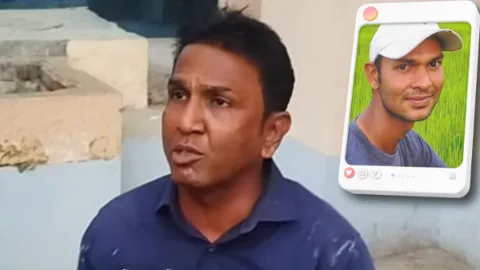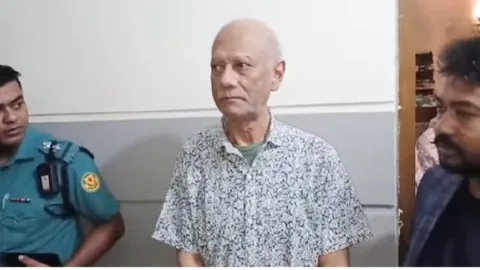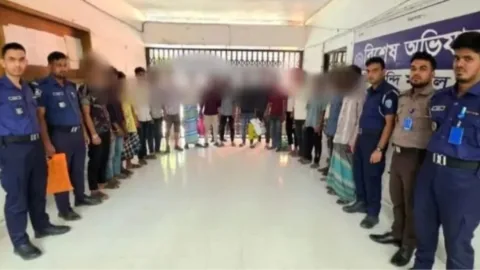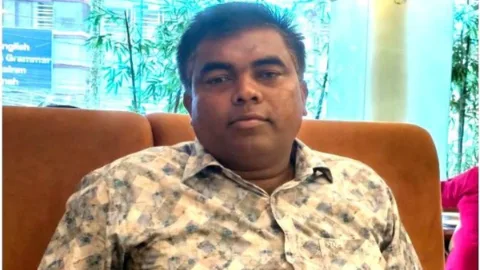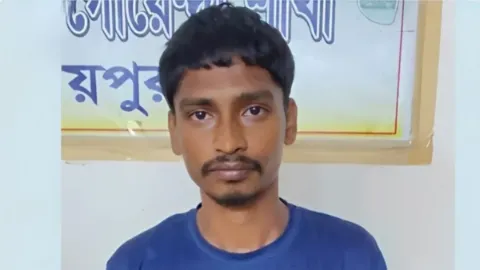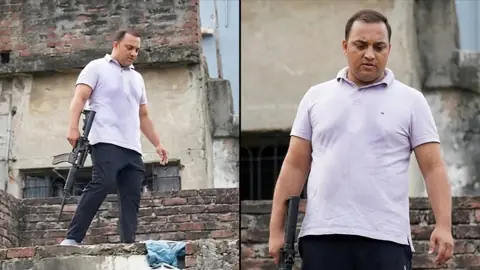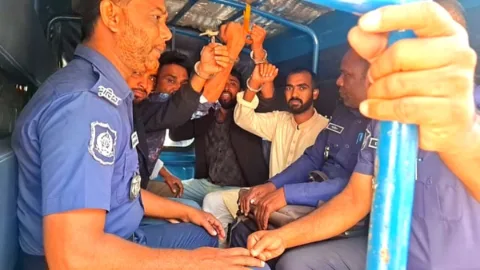
The arrest and imprisonment of four journalists in Sakhipur, Tangail, for filming a video of drug use has become a talking point in the country. The question arises - were the journalists victims of a powerful drug syndicate and administrative conspiracy while collecting information about the crime? Or is there a deeper mystery behind it? The recent incident in Deobari Bazar, Sakhipur, has raised big questions about the future of independent journalism and good governance in the state.
An investigation has revealed that on the night of last Friday (13 November), NTV Digital's Sakhipur correspondent Abdur Razzak Sujan, Daily Manabkantha's Morshed Khan, Weekly Sakhipur Barta's Sheikh Monir, and assistant Sanim Mia went to the Deobari area to collect information about a local settlement of a rape allegation, as well as to film a video of drug use in a house. But the next morning, the situation took a turn for the worse. Dariapur Union BNP's joint general secretary and Merchant Association president Fazlur Rahman Fazlu filed a extortion case against them, and police arrested and sent them to jail.
On the way to court, arrested journalist Abdur Razzak Sujan directly alleged, "The drug users tried to manage us. When we didn't agree, they created a mob and forcibly put 8,000 takas in my assistant's pocket, while the real drug users are roaming free." On the other hand, the plaintiff of the case, Fazlur Rahman Fazlu, claimed, "The drug users are criminals, but the journalists took money from them and the 8,000 takas were also recovered." However, he did not answer why he himself did not give any extortion money and why no case was filed against the drug users.
Local residents and multiple sources have long complained that the drug syndicate is so powerful that its roots are very deep. The general public alleges that a section of unscrupulous members of the law enforcement agencies regularly work as a protective shield for drug dealers in exchange for monthly bribes. As a result, when journalists try to uncover the mask of this syndicate at the risk of their lives, the criminal circle takes advantage of the administration's weakness and traps them in a case instead. Regarding this, Sakhipur police station's Inspector (Investigation) Mohammad Azharul Islam said, "The case has accused them of demanding and taking extortion money. They have been sent to court based on the primary allegations and a further report will be submitted pending investigation."
According to media analysts, most journalists in the country work at the risk of their lives, driven by their love and sense of duty towards the profession, without even a minimum salary and benefits. Meanwhile, corrupt individuals are able to embezzle hundreds of millions of taka with a single stroke of the pen. At the same time, some registered and verified media outlets (without verifying the educational qualifications, journalistic code of conduct, and existing laws of the candidates) are hiring a class of unprofessional workers just for money. Due to the unethical activities of these handful of workers, the entire mainstream honest journalist community of Bangladesh is now under threat, which is being taken advantage of by the real culprits.
According to senior lawyers of the Supreme Court, it is essential to verify digital evidence, night call lists, and the actual source of financial transactions before filing extortion cases against professional journalists. Arresting journalists without any verification is an abuse of power. Distinguished individuals warn that journalists are the future and conscience of a state. If the administration and drug syndicates continue to suppress truth-seeking journalists, a sanctuary of crime will be created in society and the state will move towards a very dark future. Therefore, it is now time to bring the real culprits under the law through a neutral investigation into the incident in Sakhipur and release the innocent journalists.
Three major questions in the background:
Read more: Durgapur robbery in DB identity, three arrested in Kalmakanda
1. Why are drug addicts above the law?
The issue of drug use has been clearly stated in the statements of the plaintiff and locals in the case, and there is also video footage of it. Yet, why did the police not file any case or arrest the main accused drug users?
2. Who became the plaintiff without being a victim?
In extortion cases, the person who pays the bribe or whose bribe is demanded usually becomes the plaintiff. But the person who became the plaintiff in this case did not pay any bribe; so, whose interest is he protecting or under whose invisible instruction did he become the plaintiff overnight?
3. Why the handcuffs without verification?
Although the police rescued the journalists and took them to the police station on the night of the incident, why were they handcuffed and taken to court the next morning without verifying the video footage in their cameras and mobile call lists?