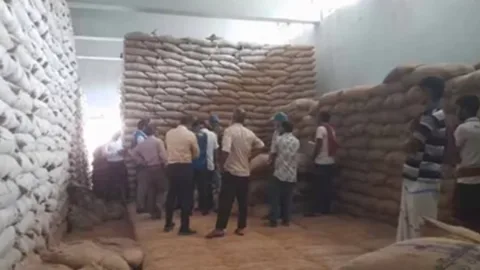
The presence of cancer-causing harmful chemical 'aflatoxin' has been detected in a large consignment of rice imported from India in a food safety assurance by the Bangladesh government. Bangladesh Rice Research Institute (BRI) scientists confirmed this information after testing samples of rice stored in Chattogram Halisahar Central Storage Depot (CSD) warehouse. A high-level investigation has started on the reason why this toxic material was born, whether it was the lack of testing in the case of rice import at the government level or the mismanagement of long transportation.
According to the investigation, a ship named 'MV HT Pioneer' arrived at the outer anchorage of Chattogram port with officially imported rice from India. After unloading the rice from the ship, the rice is distributed to various important government food warehouses of the country based on the initial clearance. However, the concerned officials of Chattogram's Halishahar warehouse objected to the quality and external color of the rice. Due to questions about the quality of rice, the distribution was temporarily suspended and the scientists of Bangladesh Rice Research Institute collected new samples from the warehouse. After lengthy and meticulous lab testing, a particular lot of rice was found to contain the poisonous aflatoxin.
Read more: Two-day ultimatum to stop DP World contract at Chattogram port
Although it is promoted as a 'cancer germ' on social media and at the general level, according to medical and agricultural scientists, aflatoxin is not a living germ, bacteria or virus. It is basically a type of highly toxic chemical substance (mycotoxin), which is naturally secreted by certain fungi (mainly Aspergillus). If food grains especially rice, wheat, or nuts are transported or improperly stored in excess moisture and damp environment for a long time, this fungus grows there. According to the World Health Organization, long-term consumption of aflatoxin-containing foods can cause severe liver damage in humans and is one of the leading causes of liver cancer.
According to the existing Food Safety Act, 2013, it is a punishable offense to store and distribute any food which is unsafe, adulterated or containing harmful chemicals for consumers. According to this law, state agencies have the obligation to ultimately ensure the quality of imported food products. A high-level investigation committee has already been constituted by the Food Department for proper investigation of this incident. The committee is probing why the quality of warehoused rice deteriorated later on despite obtaining the initial port clearance and at what level of import was the defect. At the same time, the distribution of the remaining rice of the entire shipment of 9.5 thousand tons has also been temporarily stopped.
Read more: Arrest of SP Jahangir in Chattogram for alleged information leak
The concerned officials assured that the batch of harmful rice has been sealed after the toxin was detected in the lab test, so there is no chance of this rice reaching the general public or the market. However, food safety experts feel that it is necessary to introduce a more modern and accurate multi-level screening system at the port in the case of international trade and imports to protect the public health of the country. At the same time, in order to prevent such incidents from happening in the future, it is considered necessary to re-evaluate import contracts and transport policies.