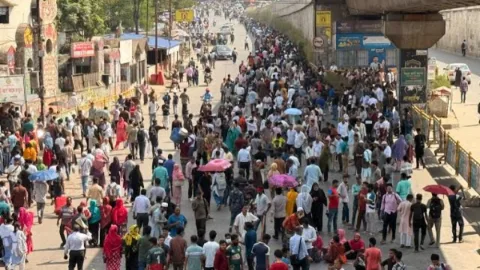
The country's main driving force for earning foreign currency, the readymade garment (RMG) sector, is now facing a multifaceted political and economic tug-of-war. Although the recent unrest in Savar, Ashulia, and Gazipur is seen as mere wage dissatisfaction between owners and workers, intelligence investigations and observations by the Industrial Police have revealed a different picture. After the August 5 changeover, the employment in the garment sector is being used as a slope by a section of the former ruling party that has gone into hiding, and their subversive activities and the so-called audio messages spreading on social media have a deep connection with this instability, according to the concerned authorities.
Factory unrest: Workers or political instigators in disguise
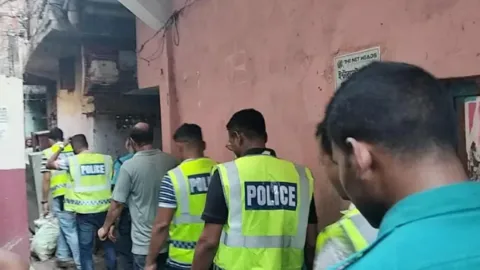
According to the Industrial Police and factory sources, the recent protests and vandalism in several factories in the Ashulia and Gazipur belts were not carried out by ordinary garment workers. The main instigators were not regular workers, but rather outsiders who had recently joined the factories, according to preliminary investigations by law enforcement agencies.
It has been learned from intelligence sources that after August 5, many local leaders and activists of the Awami League and its affiliate organizations went into hiding, leaving their areas. Later, some of them joined various factories as operators, linemen, or helpers to earn a living and hide their identities. According to a senior leader of the factory owners' association, "Ordinary workers may demand arrears or wages, which can be resolved through discussions. But in some factories, outsiders and newly hired workers are making unrealistic demands, directly stopping production, and inciting road blockades and vandalism."
Intelligence sources have revealed that the goal is to create an artificial crisis in the field by December and economically cripple the current administration. The finance ministry has confirmed that more than 200 bank accounts of suspects are under the surveillance of the central investigating agency for alleged financial transactions related to creating chaos in the garment sector.
International pressure vs. domestic reality
According to the owners' side, due to the gas-electricity crisis, high bank interest rates, and global inflation, the overall production cost of garment manufacturing has increased by about 35 to 40 percent in the last few months. On the other hand, international buyers or brands are not willing to pay a fair price for garments.
The Bangladesh Garment Manufacturers and Exporters Association (BGMEA) has stated that due to intense competition in the international market and the complexity of the global supply chain, orders are constantly at risk of being transferred to Vietnam and Cambodia. In this precarious situation, if production is disrupted in factories, the country's foreign exchange reserves will be severely affected, which will have a direct impact on food security and overall public life.
Absence from live media: Is the alleged audio message an AI voice clone?
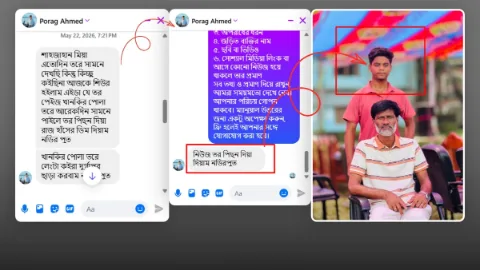
In the political arena and at the grassroots level, if you listen, you can hear talk of a 'December mission' - where it is being claimed that former Prime Minister Sheikh Hasina will return to the country. However, according to observers and IT experts, since 5 August, Sheikh Hasina has not been seen speaking in person on any international news media or reliable live video platforms. Yet, almost regularly, various 'phone conversations' and 'directive' audios that sound like her voice are being spread on social media in an attempt to reassure and motivate workers.
According to technology experts, using Deep Learning and Advanced Audio Generative AI (AI voice cloning) technology, it is now possible to recreate someone's exact voice, speaking style, and tone using just a few seconds of clear audio samples. Digital security analysts fear that AI-cloned fake audios may be used as a psychological warfare or propaganda tool to create confusion in the legal and political reality of Sheikh Hasina, who is currently in India, and to lure grassroots workers into violence.
Legal and constitutional context
According to Bangladesh's Labour Act, 2006 (amended), any violence, illegal strike, or vandalism in any industrial establishment is a serious criminal offense. Similarly, under the Bangladesh Penal Code 1860 and the Cyber Security Act, creating fake audio-video using artificial intelligence through digital media, spreading chaos, inciting riots, or conspiring to destabilize the state is a punishable offense.
According to the fundamental provisions of the Constitution, it is the constitutional duty of the government to maintain the country's economic security and protect the lives and property of citizens. The police administration has warned that individuals involved in creating unrest in industrial areas, regardless of their political identity, will face stern legal action based on evidence.
Read more: Japan to provide massive $6.35 billion investment cooperation to Bangladesh
In conclusion
The garment industry is the lifeline of the country's economy and the livelihood of more than 4 million workers. If this sector cannot be protected from political revenge, instability, and technology-based psychological propaganda, it will not only destroy the industry but also affect every ordinary citizen of the country.
(Source: Industrial area police and law enforcement agencies; BGMEA and factory owners' association; Bangladesh Bank's surveillance department and cybercrime investigation unit.)