Padma Bridge South police station (Shariatpur) correspondent and own reporter:
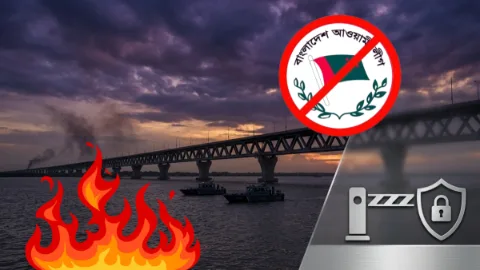
In Shariatpur's Jazira upazila, a clash and arson incident occurred between leaders and activists of the banned Awami League and BNP on the connecting road (Dhaka-Bhanga Expressway) of the Padma Bridge South police station in the Nawdob area early Sunday (29 November). One activist of the banned Jubo League, named Ibrahim Sepahi (30), was killed and at least 20 people, including two gunshot wounds, were injured. The incident has exposed the visible security lapse and intelligence weakness of the law enforcement agencies near the country's largest state installation. Locals have demanded the establishment of temporary army camps on both sides of the bridge and a permanent ban on the militant organization responsible for the incident.
Read more: Gopalganj sudden visit by top three forces' chiefs: what does the investigation say?
Origin and damage of the incident:
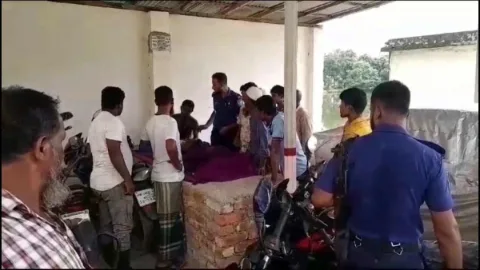
According to eyewitnesses and police sources, several hundred leaders and activists of the banned Awami League gathered in the Nawdob area with logs, homemade weapons, and cocktails around 5:30 am today, blocking the road. At that time, clashes broke out with BNP leaders and activists who had been stationed in the area since Friday to prevent sabotage. During the clash, at least 25-30 motorcycles and a local restaurant and market were set on fire. After about an hour and a half of traffic congestion, the police brought the situation under control by firing tear gas and sound grenades.
Visible security lapse and way out:
According to the national protection policy of important installations, the Padma Bridge is a first-class sensitive installation, with the 'Padma Senanibas' (formerly known as Sheikh Russell Senanibas during the previous fascist regime) located on both sides of Jazira and Mawa. However, the lack of activity and surveillance of law enforcement agencies on the connecting roads outside the main bridge was visibly evident today.
According to security analysts and local conscious circles, three steps are urgently needed to address this shortfall:
1. Establishment of temporary army camps: According to sections 129-131 of the country's prevailing criminal procedure, it is lawful for the civil administration or police to deploy armed forces to protect public safety and important installations if they are hesitant. Simply patrolling will not work, as militants can regroup after the army leaves. Therefore, temporary army camps need to be set up on the connecting roads of Jazira and Mawa toll plazas around the clock.
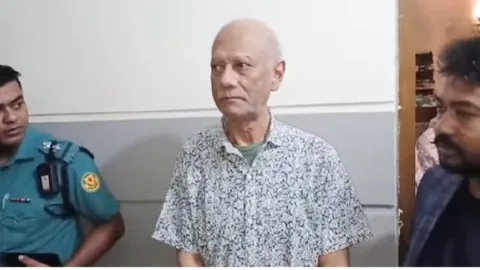
Read more: Former education minister arrested from secret hideout in Uttara
2. Modern intelligence surveillance and phone tracking: The fact that hundreds of people gathered with arms and cocktails in the darkness of dawn is a sign of intelligence failure. Therefore, mobile phone tracking and digital surveillance of suspects need to be increased to gather prior information.
3. The force's internal cleansing campaign: Locals complain that some members who benefited from the previous government are still inside the law enforcement agencies, who are helping to implement a hidden agenda. These need to be identified and action taken quickly.
Locals' anger and the legal process of permanent ban:
Talking to ordinary people in Jajira, it is learned that the terrorists do not fear the police much. A local veteran resident said, "People no longer fear the police as they used to. But if a temporary army camp is set up on both sides of the bridge, the terrorists will not dare to gather around." Expressing anger over the corruption of the past and the chaos of today, another local resident said in the regional language, "They are finishing off the country in the name of one Padma Bridge. Now they are starting the politics of killing people again."
Local residents and multiple sources claim that in order to save the country, this organization needs to be permanently banned. According to legal experts, under Section 18 of Bangladesh's existing 'Anti-Terrorism Act, 2009', if any organization or entity endangers public safety, destroys state property, or is involved in terrorist and subversive activities, the government has the full legal power to permanently ban that organization through a government notification.
Statements from politicians and administration:
According to Shariatpur-1 constituency MP Saeed Ahmed and local politicians who were present at the scene, they are daring to take to the field today because they were not taken strict legal action from the beginning and were released. On the other hand, Shariatpur's Additional Police Superintendent (Naria Circle) Mohiuddin Miraz confirmed the death and Additional Police Superintendent (Crime and Ops) Zakaria Rahman said that evidence has been seized from the scene and an operation is underway to arrest those involved.